Remembering Francis William Ogilvie-Grant
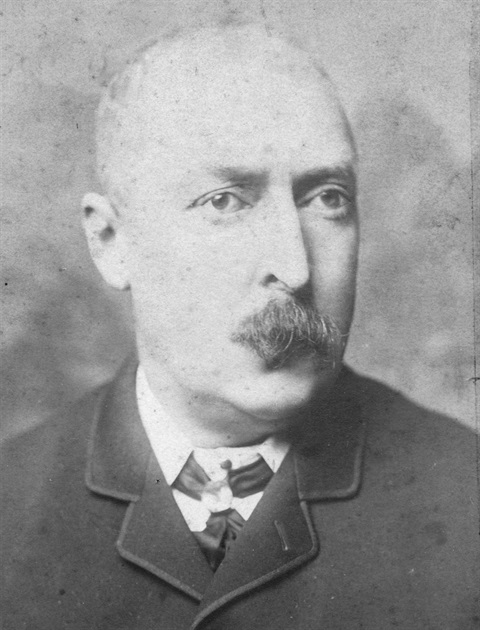
Remembering Francis William Ogilvie Grant
The story of Francis William Ogilvie-Grant is an interesting one. Frank, as he was called by his peers, was an everyday North Otago citizen who arrived to the district from Britain in 1870. He commenced his life in New Zealand as a Farmer, and ended it as the 10th Earl of Seafield. He is buried in the Oamaru cemetery with two of his young children.
Francis Ogilvie-Grant was a junior naval officer in the British Royal Navy. It is believed he left the navy after a disagreement with his father and took a 100 day passage to New Zealand aboard a sailing ship to join family in North Otago.
Ogilvie-Grant’s Uncle, Major George Thomas Evans, had a farm in the Kia Ora area of North Otago. It is believed that on his arrival to Oamaru, Grant walked to the farm in Kia Ora, occasionally with his boots off, arriving with bleeding feet. Also, as mail was often delayed in those days, his Uncle was not aware that his nephew would be visiting, and was therefore surprised at his arrival.
After living at his Uncles farm for a number of months, Ogilvie-Grant married his first cousin Anne Trevor Corry Evans, who was also known as Nina. The newlyweds settled on their own farm named Balmacaan. The first of their seven children was born in 1876.
Ogilvie-Grant struggled with the farm during the build up to the economic depression and lost it when hard times hit in 1878. He and his family were forced to move to Oamaru to find whatever work they could. Ogilvie-Grant set himself up as a land agent, a venture which also ended in failure. He then tried his hand at labouring work, which was hard to come by. He often found himself and his family close to dire poverty.
In 1884, while working as a court bailiff, Ogilvie-Grant received news that changed his life. The Ogilvie-Grant family was a division of the Peerage of Scotland, meaning the title of Earl of Seafield passed through them for generations. Ogilvie-Grant’s Father James had recently received the title due to the untimely death of the prior Earl of Seafield, his unmarried 33 year old cousin. This unexpected event bestowed Francis Ogilvie-Grant with the title of Viscount Reidhaven and therefore heir to the Earldom of Seafield.
Unfortunately this new status did not come with a large fortune. However the living situation of Ogilvie-Grant did improve and his family was rescued from financial hardship. The family moved into the house on Humber Street that had been previously owned by Henry France and alterations were made to enlarge the home.
After receiving his heirdom, Oglivie-Grant was persuaded by his friends to stand for Parliament, once in the 1884 election and for a second time in the by-election of 1885; he did well in the polls but was defeated both times.
On 5 June 1888 Ogilvie-Grant’s father passed away and he became the 10th Earl of Seafield, the 4th Lord Strathspey and the 29th Chief of Clan Grant, however only six months after receiving his title Ogilvie-Grant passed away at his Humber Street home. He had been suffering silently with heart troubles, and was only 41 years old. The funeral was a significant event, with a procession taking place on Thames Street.
Ogilvy-Grant’s oldest son James, who became the 11th Earl of Seafield, was sent to live with the family in Britain so that he could receive a good education. He lost his life in 1915, the result of wounds received at battle during World War I.
All information in this article comes from the North Otago Museum Archive.
Sources for this article:
- Evans (date unknown) ‘10th Earl of Seafield, notes’, North Otago Museum Archive, n. 08/666.
- McDonald, K. C (date unknown) ‘North Otago Biographies’, North Otago Museum Archive, n. 22303.
- McDonald, K. C (1962) ‘White Stone Country’, p. 207.
- Oamaru Mail (6 June 1888) ‘Death of the Earl of Seafield’, p. 3.
Written by Shanann Carr, Curator of Archives, June 2009